# Input:
1. Data matrix (column vector);
2. “1ANAVA1matrix”

# Output:
1. sqtr: sum of squares of treatment;
2. sqr: sum of squares of residuals;
3. qmtr: mean square of treatment;
4. qmr: mean square of residual;
5. F: value of Snedecor's F distribution;
6. p: p-value;
7. R²: coefficient of determination.One-way ANOVA (single-factor ANOVA)
ANOVA (Analysis of Variance) is a widely used statistical procedure across several fields of knowledge when the objective is to assess whether or not there are significant differences among groups tested in an experiment. In this approach, comparisons are based on the measurement of error variability between groups and the variability observed within each group.
ANOVA can be conducted for different types of experimental designs, with the most common being one-way ANOVA (single criterion or factor of variation) and two-way ANOVA (two factors of variation).
ANOVA can be conducted for different types of experimental designs, with the most common being one-way ANOVA (single criterion or factor of variation) and two-way ANOVA (two factors of variation).
The 1ANAVA1matrix program computes the parameters and p-value for a one-way ANOVA, requiring only the input of a data matrix (column vectors).
1 Files:
2 Usage and example
The compressed file includes an example of results from a randomized experiment (Vieira, 2000, p. 39).
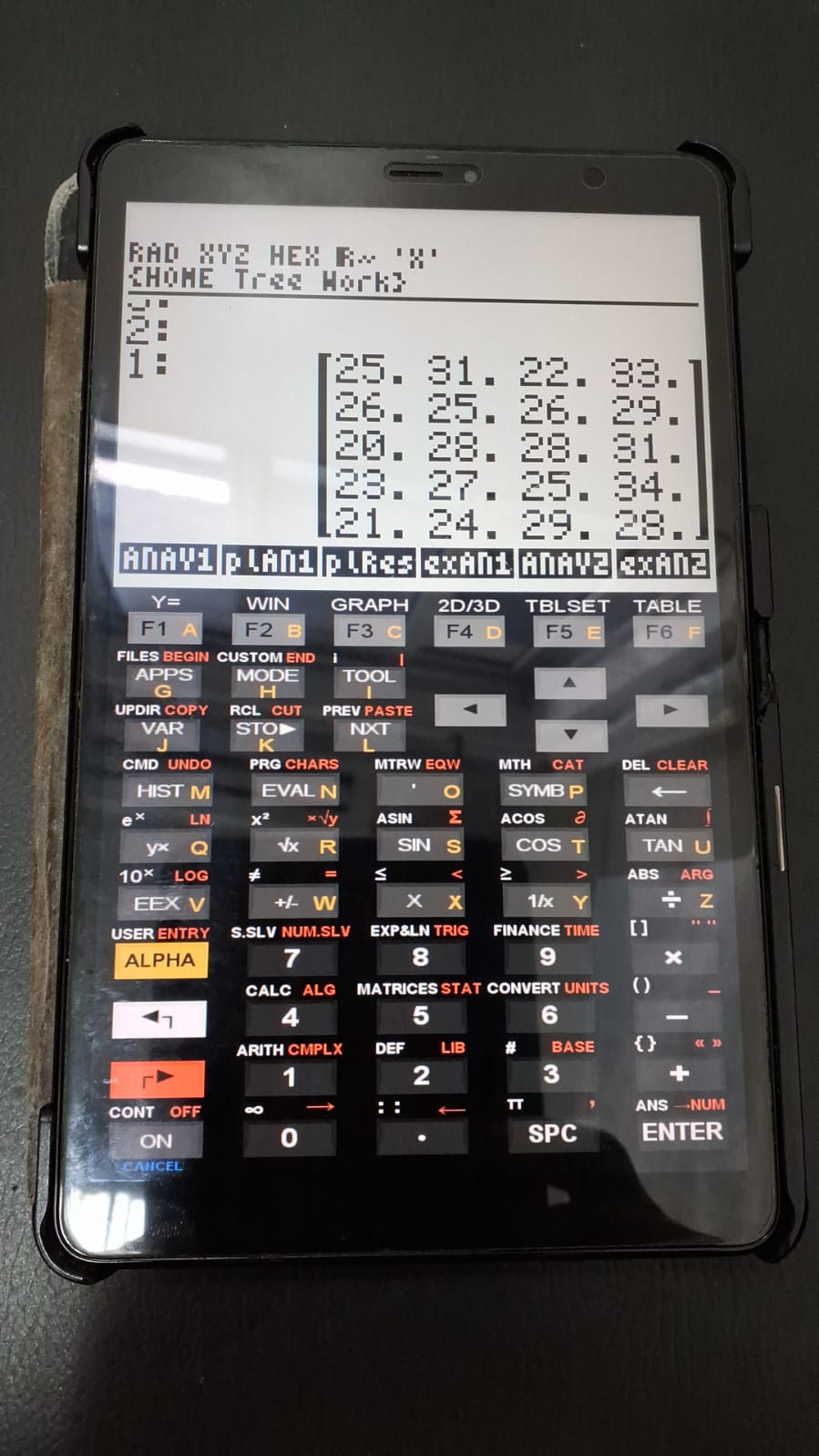
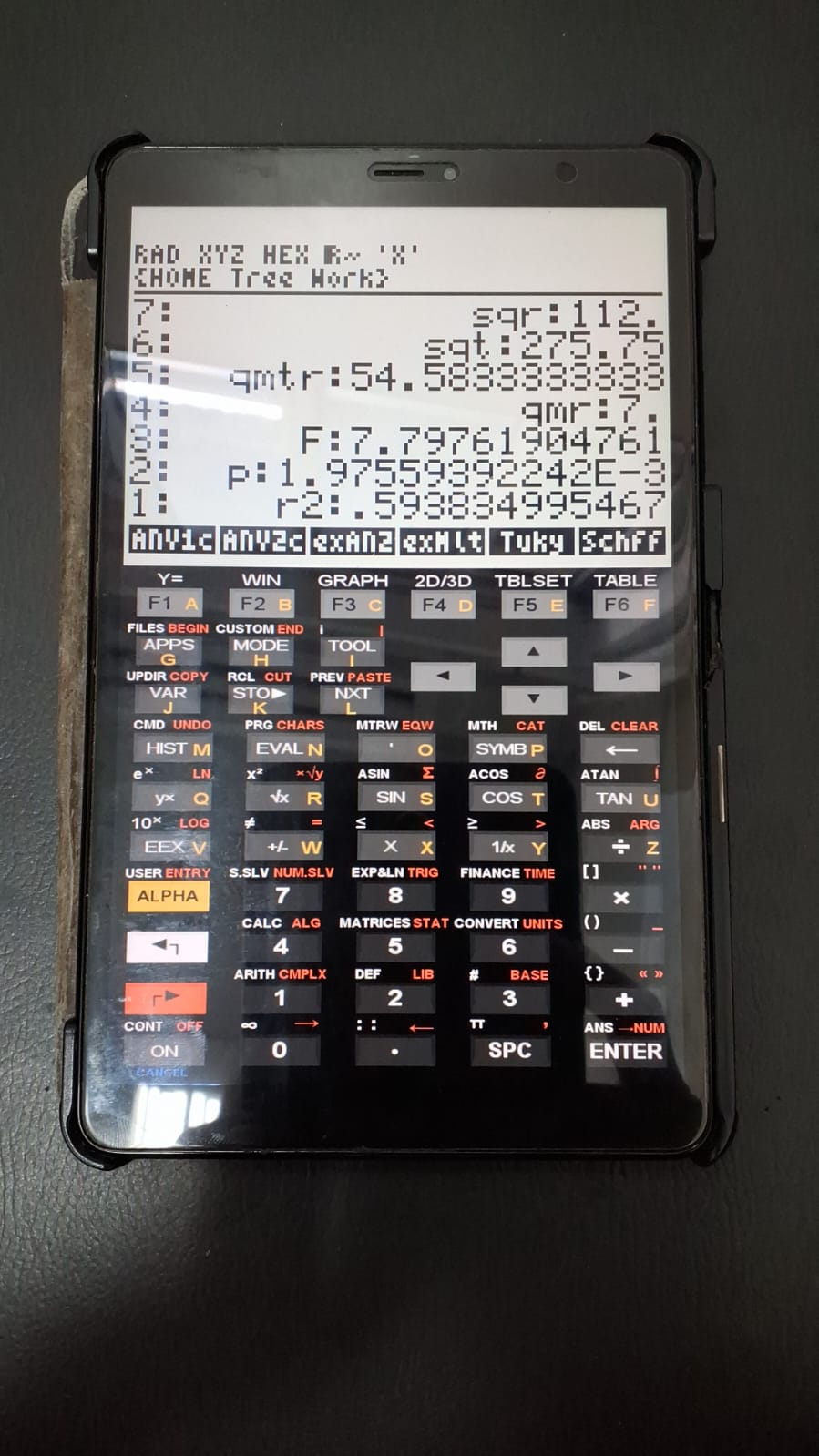
The results obtained are consistent with those reported in the reference (Vieira, 2000).
3 References:
- Vieira, Sônia. Analysis of Variance: ANOVA. Atlas Publishing, 2000.