# Input:
1. Enter a matrix containing the dataset;
2. Run the program "1ANAVA1matrix" from the main page ("hp50");
3. Run the program "Tukey1matrix".

# Output:
1. "qcrit5%" – value from the *q* distribution;
2. "HSD" – minimum significant difference;
3. Matrix containing comparison values for each pair of groups.Multiple Comparisons Using Tukey’s HSD Test
Tukey’s HSD (Honestly Significant Difference) test is one of the most widely used post-hoc procedures when the goal is to determine whether there are statistically distinct group(s) within a sample, based on pairwise comparisons. As with other post-hoc tests, Tukey’s HSD is performed after conducting an ANOVA.
It is considered a conservative test and relies on the studentized range distribution (q table). The standard Tukey–HSD test is applied when groups have equal sample sizes. For unequal group sizes, its extension—the Tukey–Kramer test—is used.
1 Equation:
\[ HSD = q_{(df,k)} \frac{qmr}{r} \]
Where:
- df = degrees of freedom of the sample (n − k);
- k = number of groups;
- r = number of observations per group
- qmr = mean square of residuals;
- q = critical value from the studentized range distribution (q-critical).
2 Files:
3 Usage and example
Pairs are considered significantly different when:
\[ \Delta AB > HSD \]
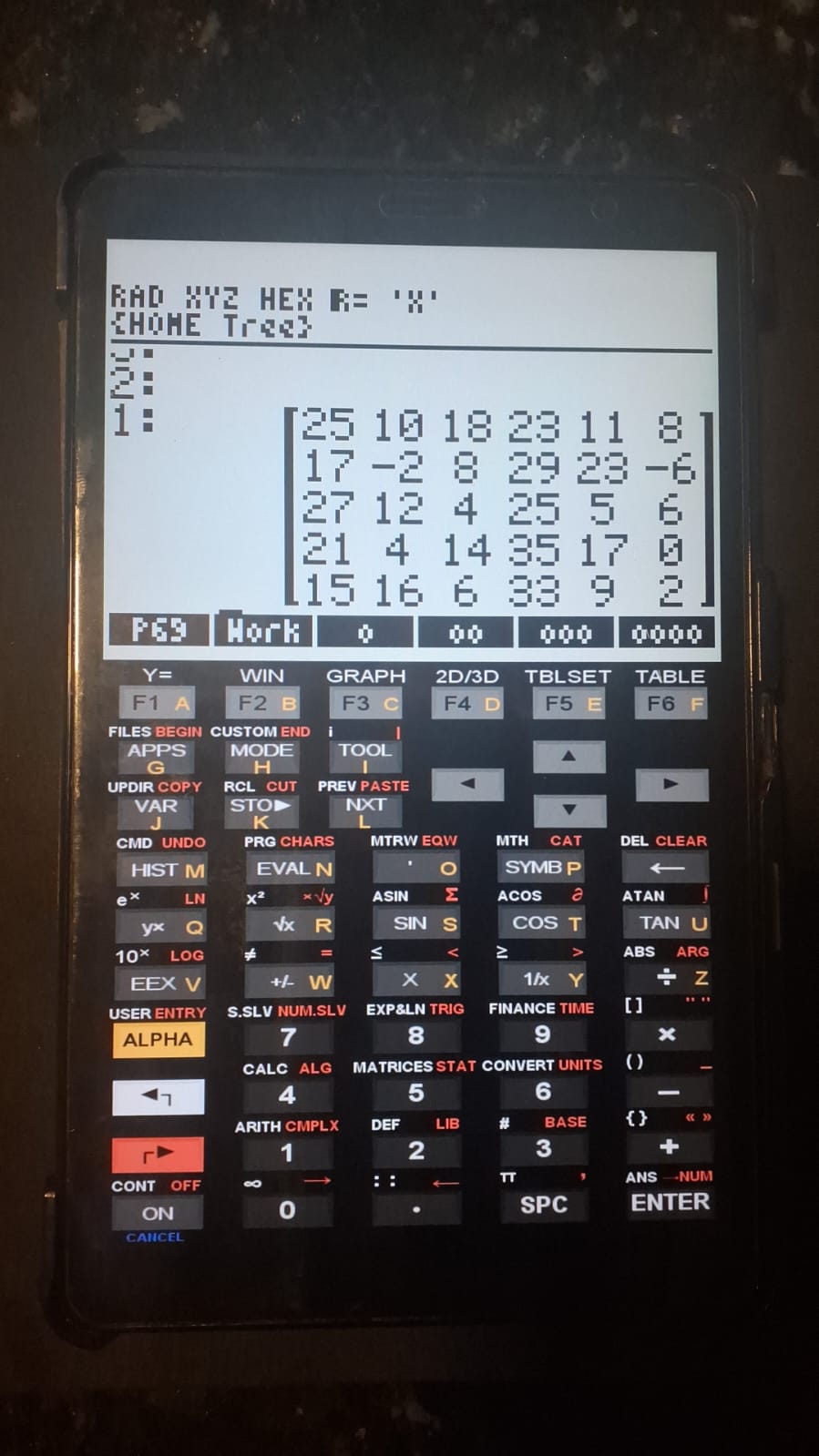
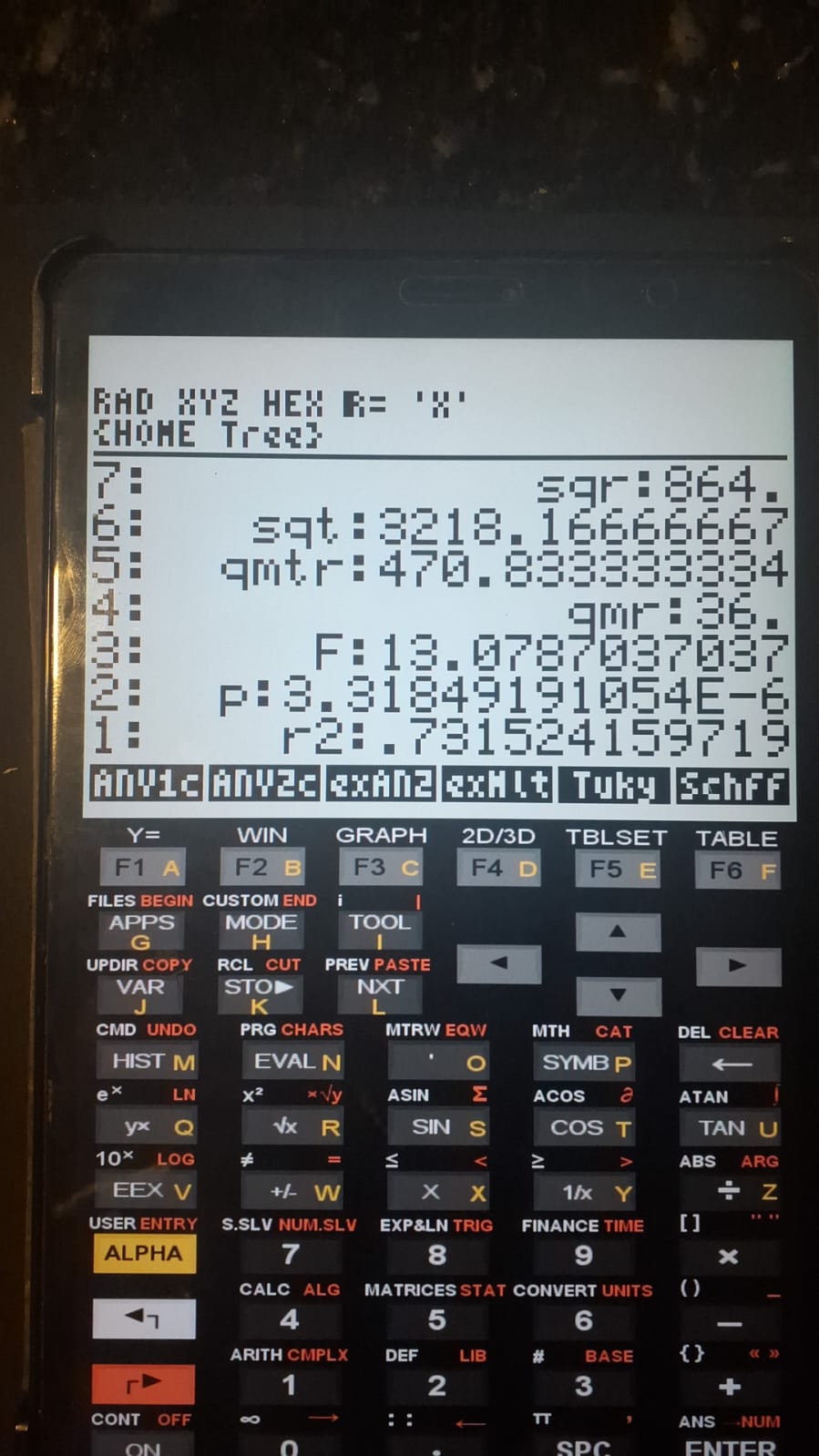
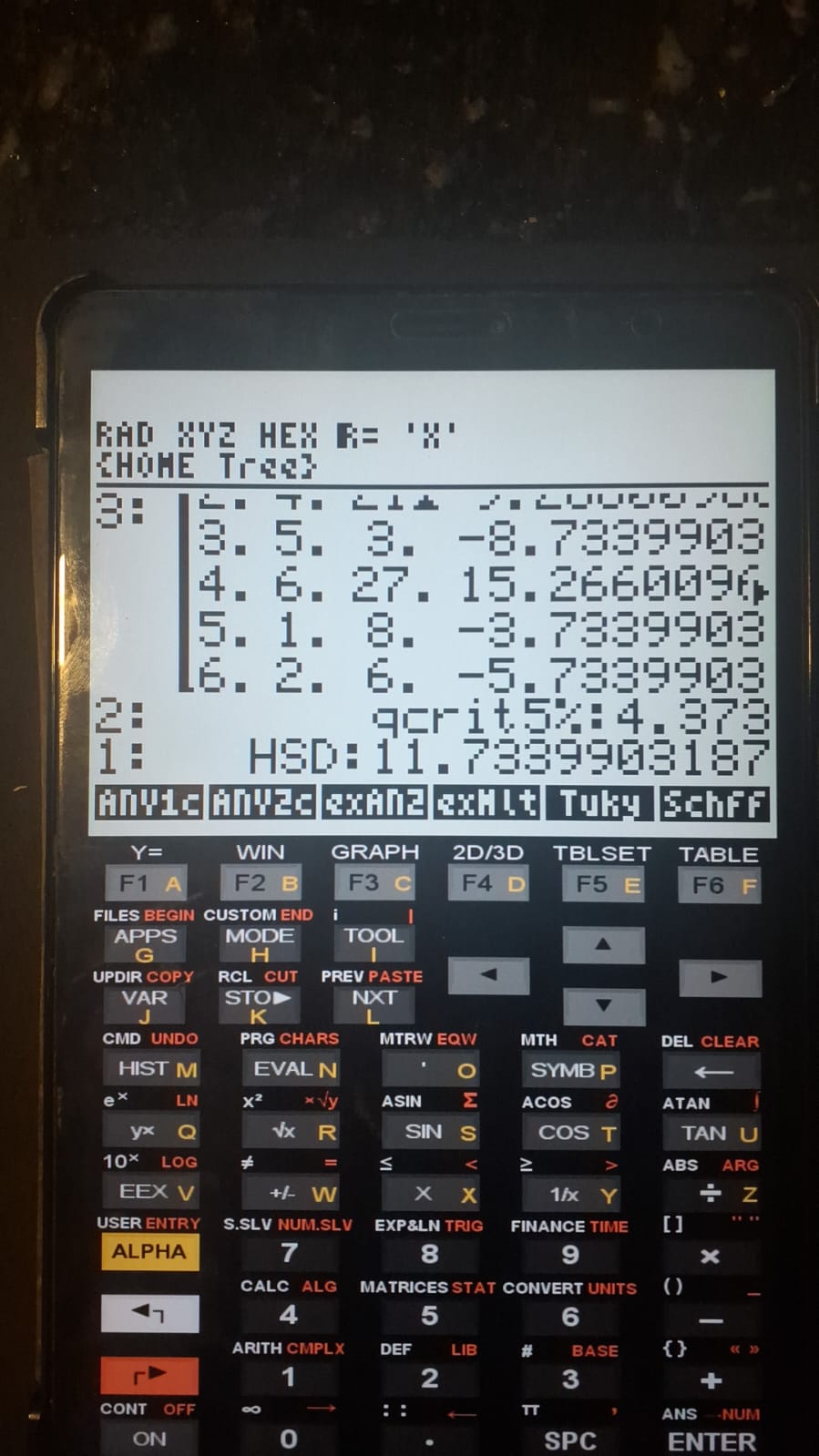
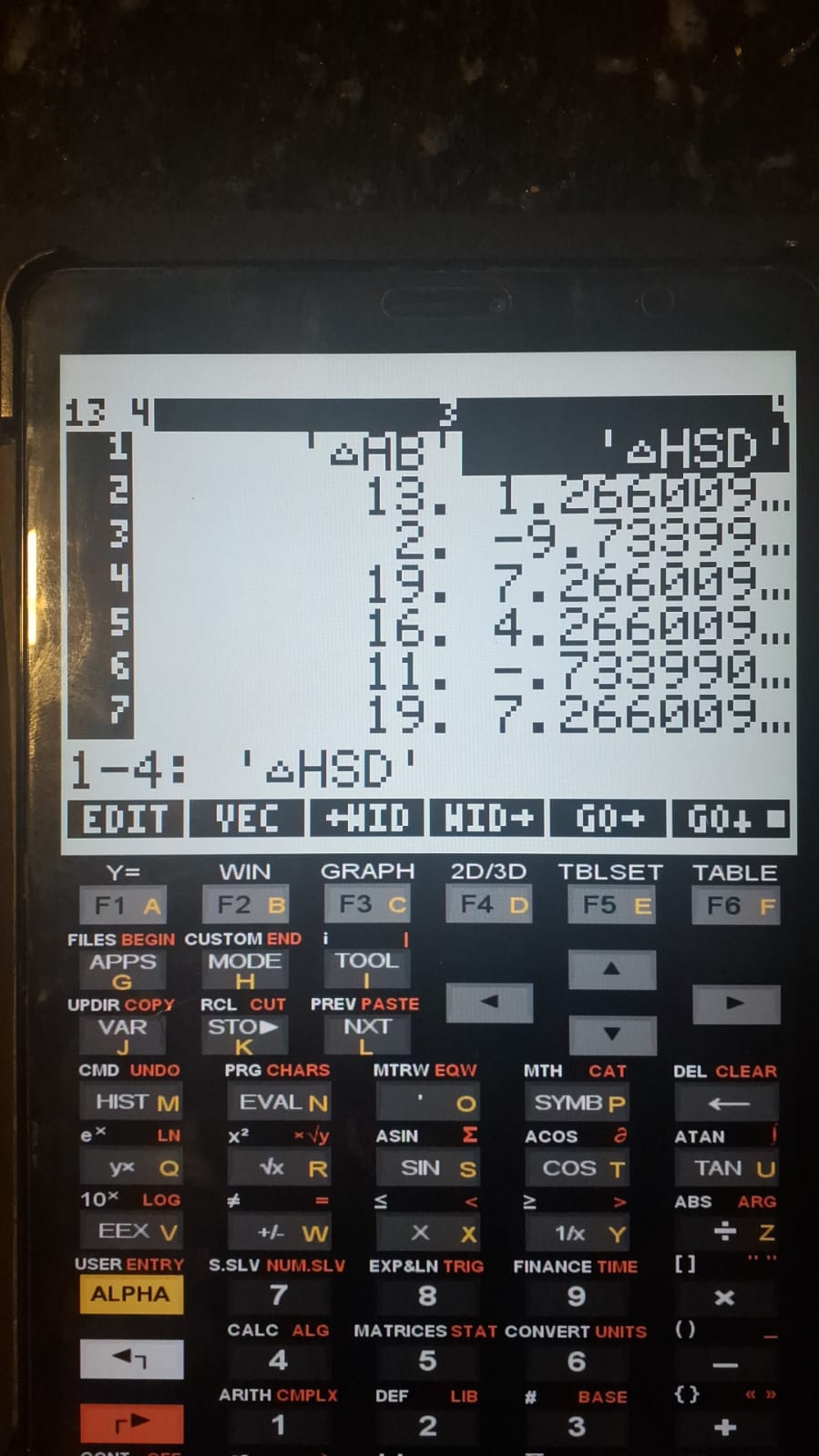
The results are identical to those reported in the reference source (Vieira, 2000).
4 References:
- Vieira, Sônia. Analysis of Variance: ANOVA. Atlas Publishing, 2000.