# Input:
1. Enter the data matrix (column vectors);
2. Run the program "1ANAVA1matrix" from the main page ("hp50");
3. Run the program "SNK1matrix".

# Output:
1. "qcrit5%" – critical value of the q distribution;
2. "dm" – minimum significant difference;
3. Matrix containing comparison values for each pair of groups.Multiple Comparisons by the Student–Newman–Keuls Test
The Student–Newman–Keuls (SNK) test is a post-hoc procedure similar to Tukey’s test, based on the same studentized range distribution. However, it is more conservative in detecting statistically significant differences (i.e., it rejects the null hypothesis less frequently).
1 Equation:
\[ dm = q_{\alpha, k, gl} \sqrt{\frac{qmr}{r}} \]
Where
dm = critical difference
gl = degrees of freedom of the sample (n − k);
k = number of groups;
r = number of observations per group;
qmr = mean square of residuals;
q = studentized range statistic (critical q value).
The SNK procedure differs from Tukey’s test by applying an ordered ranking of the group means (ascending order in the present program) and performing specific pairwise comparisons according to that ranking. As with Tukey’s test (and other post-hoc procedures), SNK is performed after an ANOVA.
2 Files:
3 Usage and example
Pairs are considered significantly different when:
\[ \Delta AB > dm \]

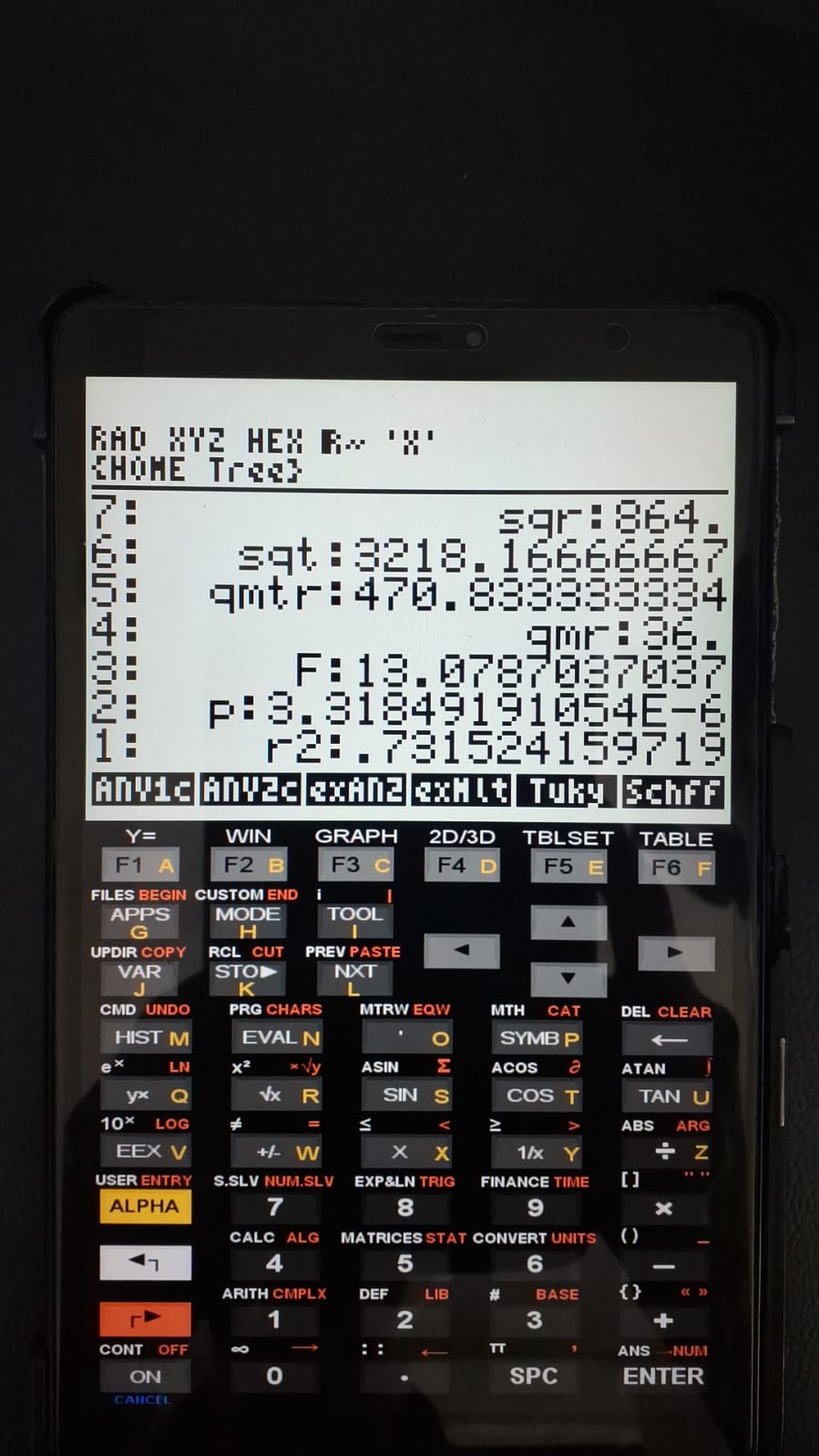
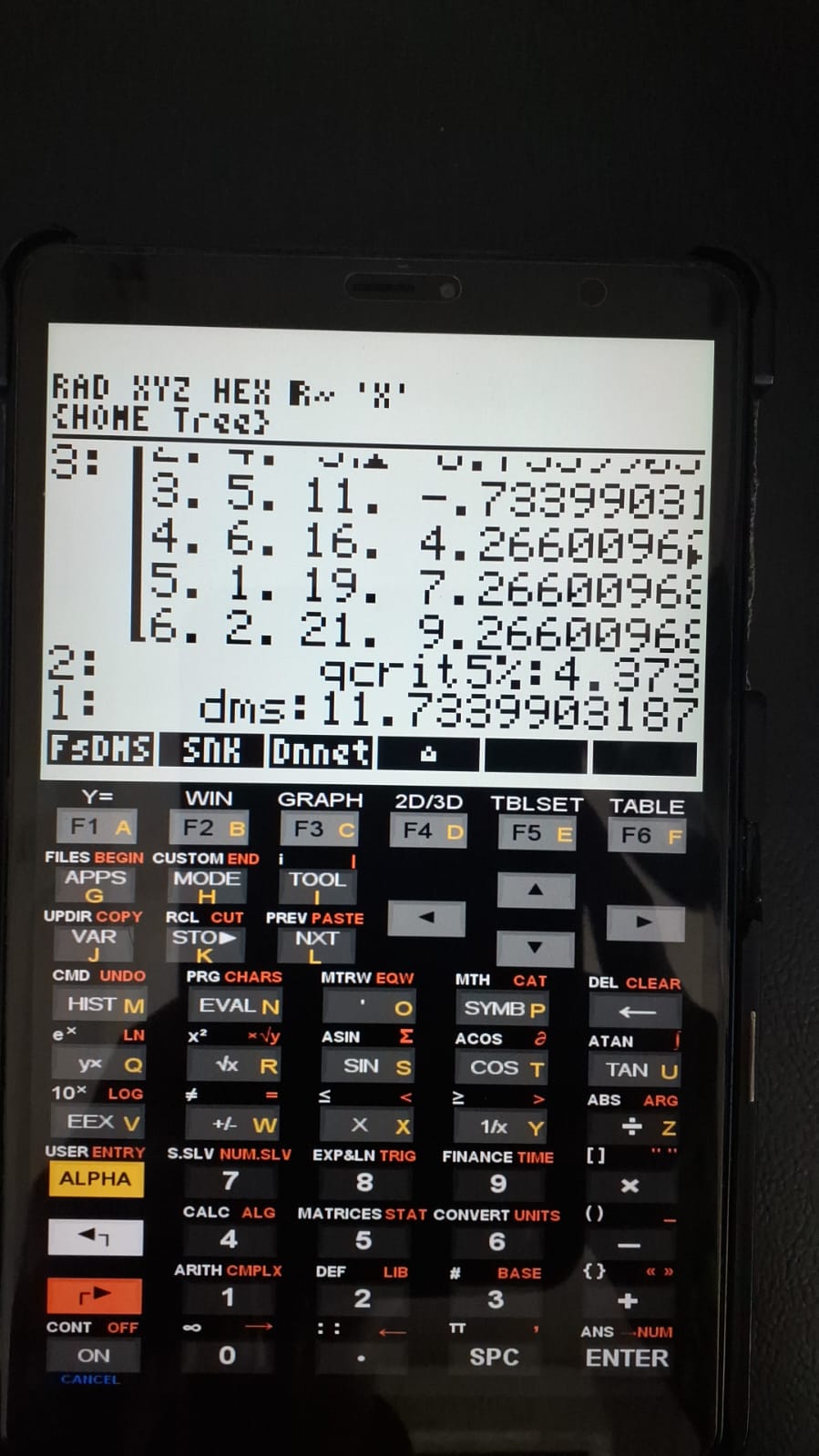

The results match those reported in the reference source, considering the ranking of treatments (Vieira, 2016).
4 References:
- Vieira, Sônia. 2016. Blospot. Accessed Feb 12, 2026.