# Input:
1. Data matrix containing the dataset;
2. Run the program "1ANAVA1matrix" from the main page ("hp50");
3. Run the program "Fish1matrix".

# Output:
1. "lsd" – least significant difference value;
2. Matrix containing comparison values for each pair of groups.Multiple Comparisons by Fisher’s LSD Test
Fisher’s LSD (Least Significant Difference) test is a post-hoc procedure for multiple comparisons of paired treatment means based on Student’s t distribution. A pairwise absolute difference between treatments is considered significant whenever it exceeds the critical LSD value (called DMS in Portuguese).
1 Equation:
\[ LSD = t_{(\alpha,, df)} \sqrt{\frac{2 \cdot qmr}{r}} \]
Where
- LSD = least significant difference (minimum significant difference);
- k = number of groups (with degrees of freedom for treatments (df_{tr} = k - 1));
- r = number of observations per group;
- qmr = residual mean square;
- t = critical value from Student’s t distribution.
2 Files:
3 Usage and example
Pairwise comparisons are automated in the program. Pairs are considered significantly different when:
\[ \Delta AB > LSD \]
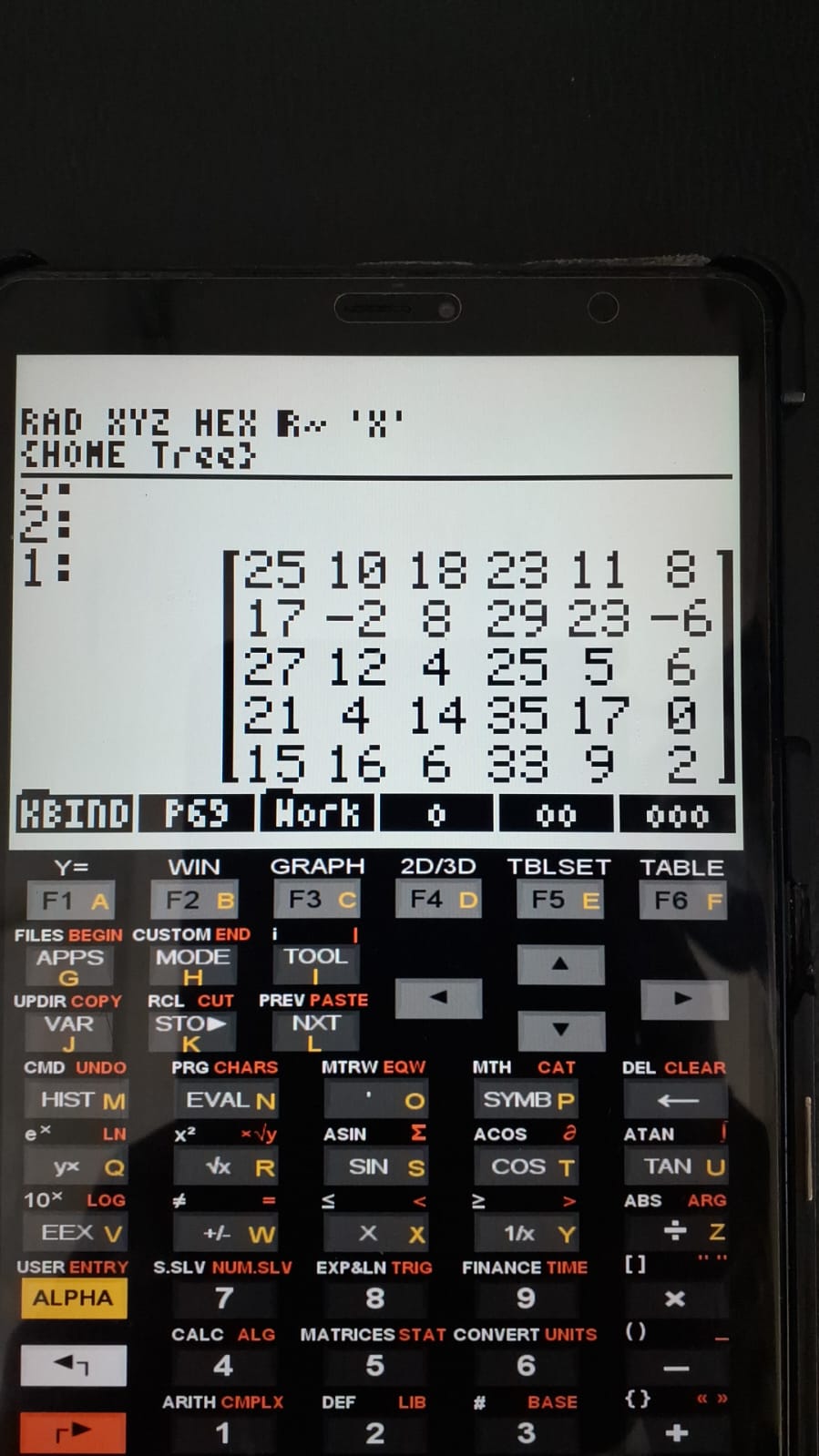
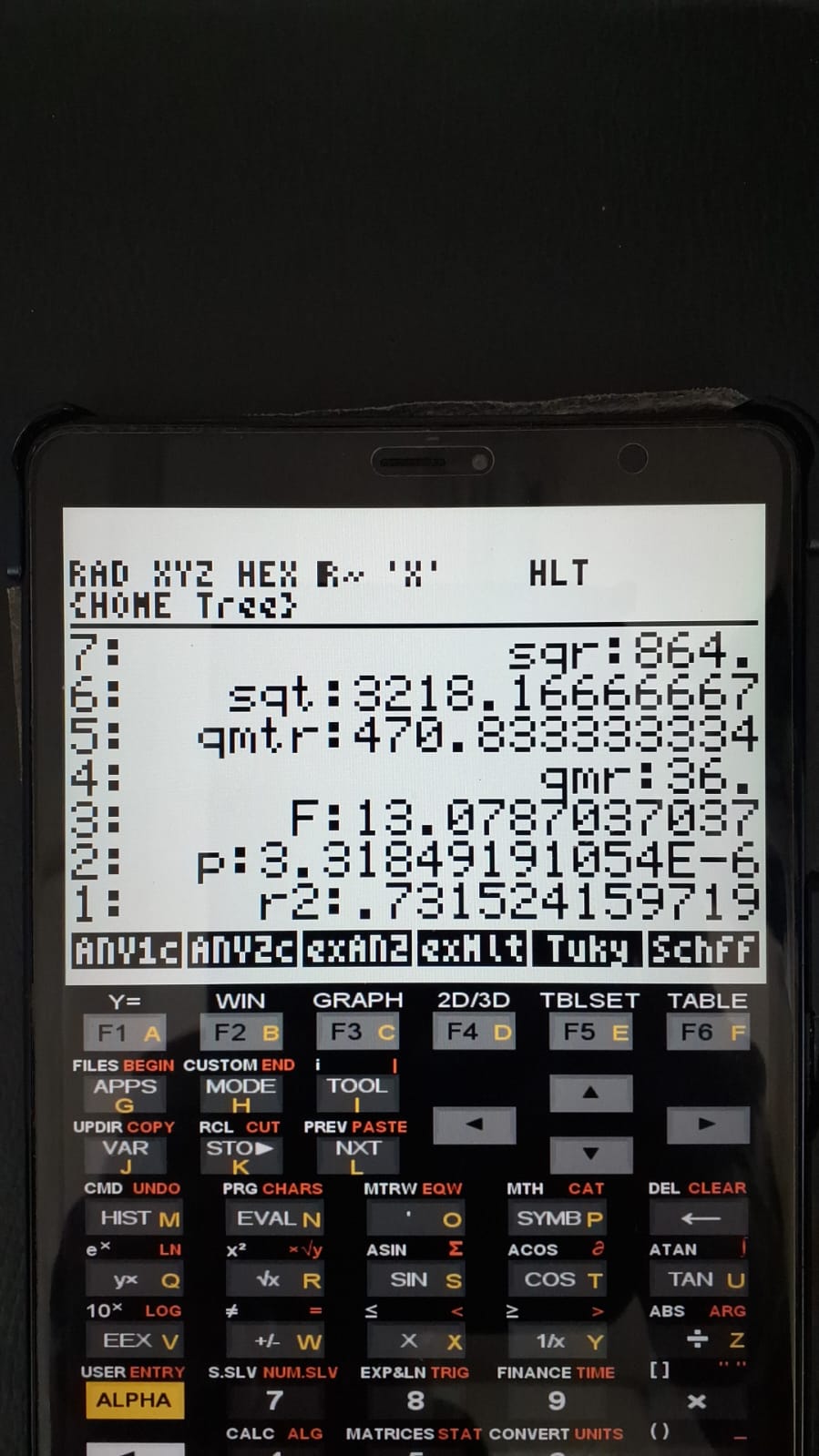
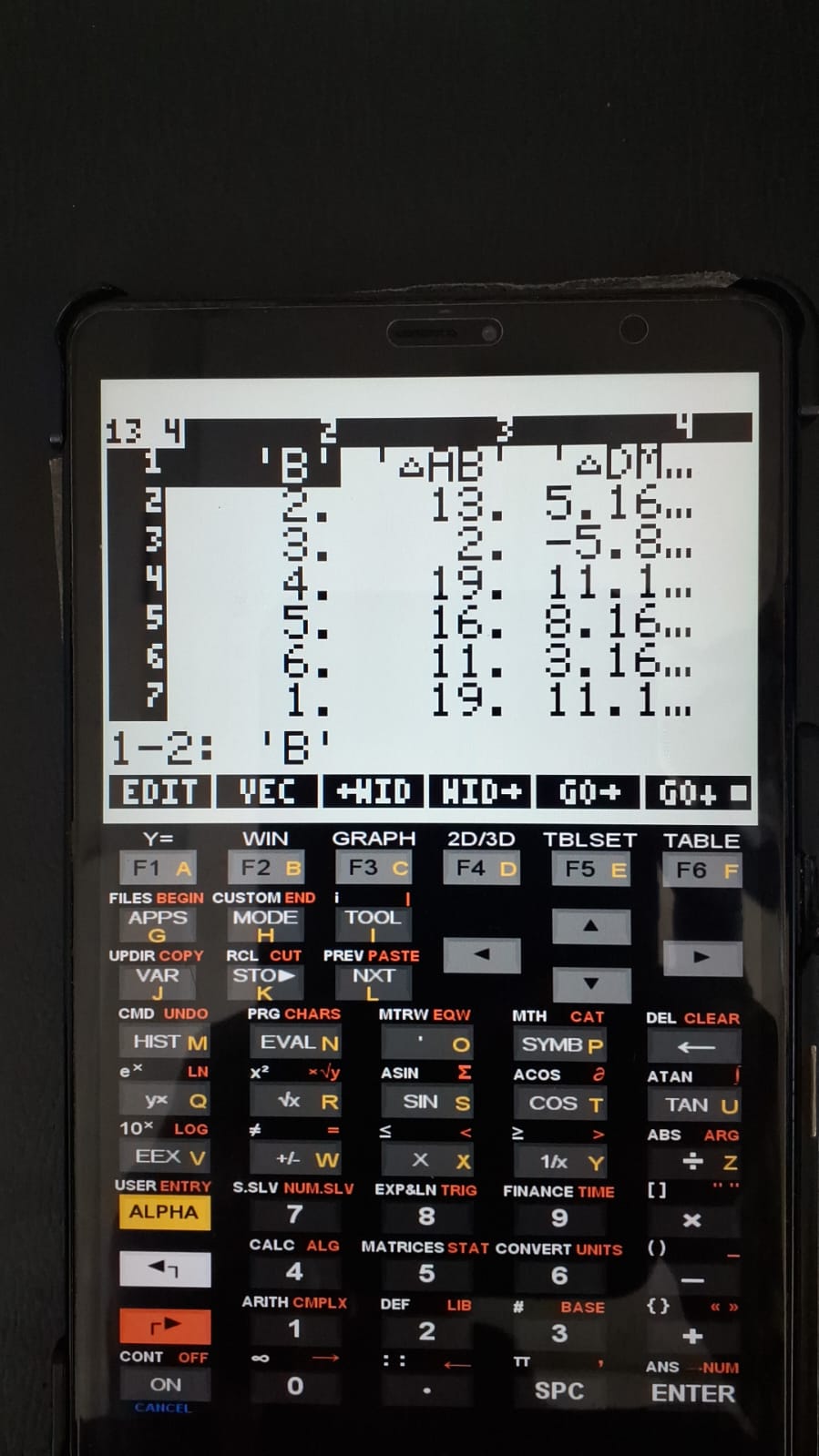
The results are identical to those reported in the reference source (Vieira, 2000, p. 69).
4 References:
- Vieira, Sônia. Analysis of Variance: ANOVA. Atlas Publishing, 2000.