# Input:
1. Data matrix (column vectors);
2. "2ANAVA1matrix"

# Output:
1. sqtr: treatment sum of squares;
2. sqb: block sum of squares;
3. sqt: total sum of squares;
4. qmtr: treatment mean square;
5. qmb: block mean square;
6. qmr: residual mean square;
7. Ftr: Snedecor’s F value for treatments;
8. Fbl: Snedecor’s F value for blocks;
9. p: p-value for treatments;
10. pbl: p-value for blocks;
11. R2: coefficient of determination of the model.Two-way ANOVA (Two-Factor Analysis of Variance)
Two-way Analysis of Variance (two-factor or bidimensional ANOVA) allows comparison of within-group and between-group variances for two sources of variation in a randomized block design.
The 2ANAVA1matrix program computes statistical quantities including p-values for a two-way ANOVA (blocks). As in previous programs, data input is performed using a single matrix (column vectors only).
1 Files:
2 Usage and example
The compressed file includes an example from a randomized experimental trial (Vieira, 2000, p. 81).
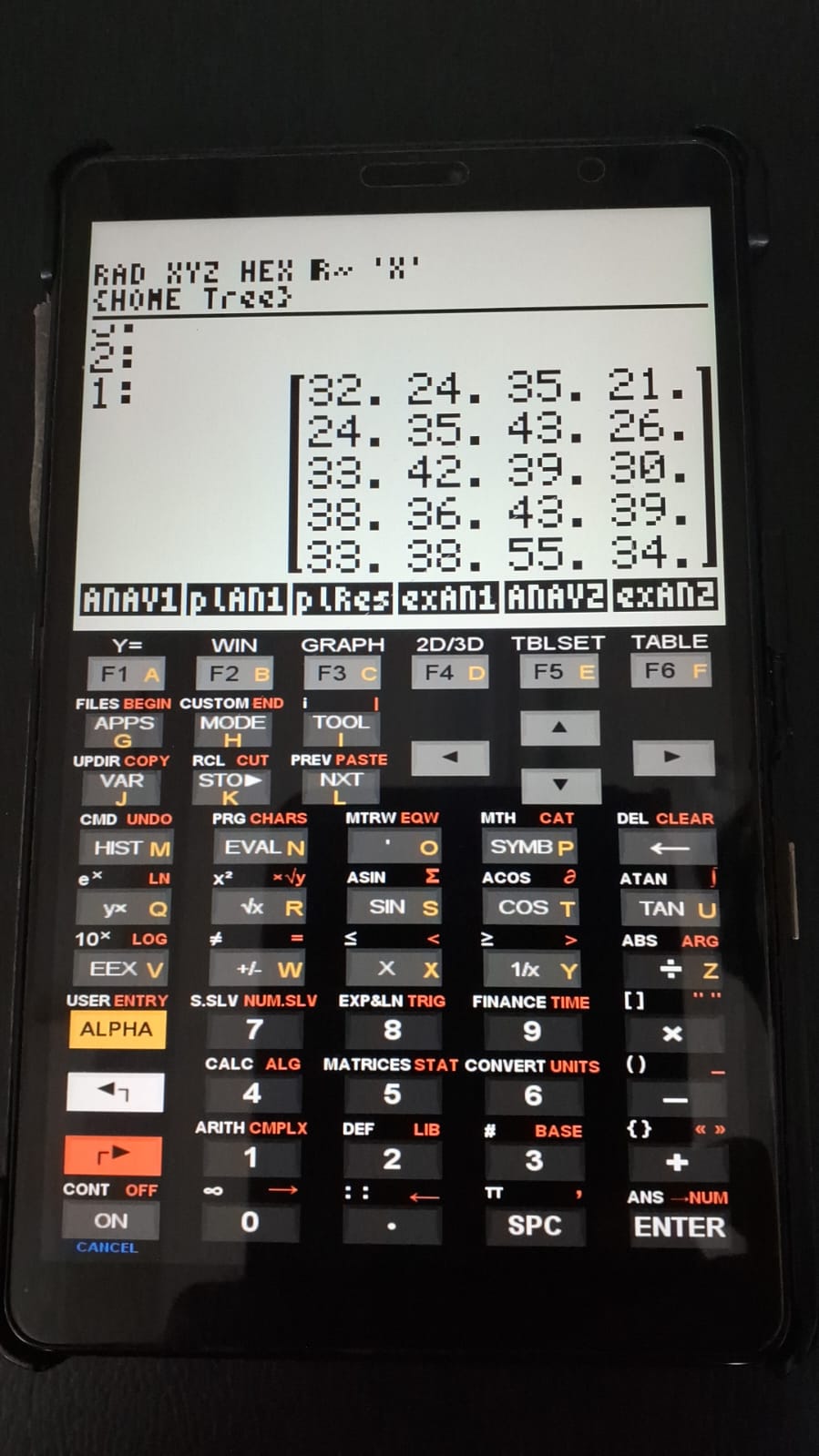
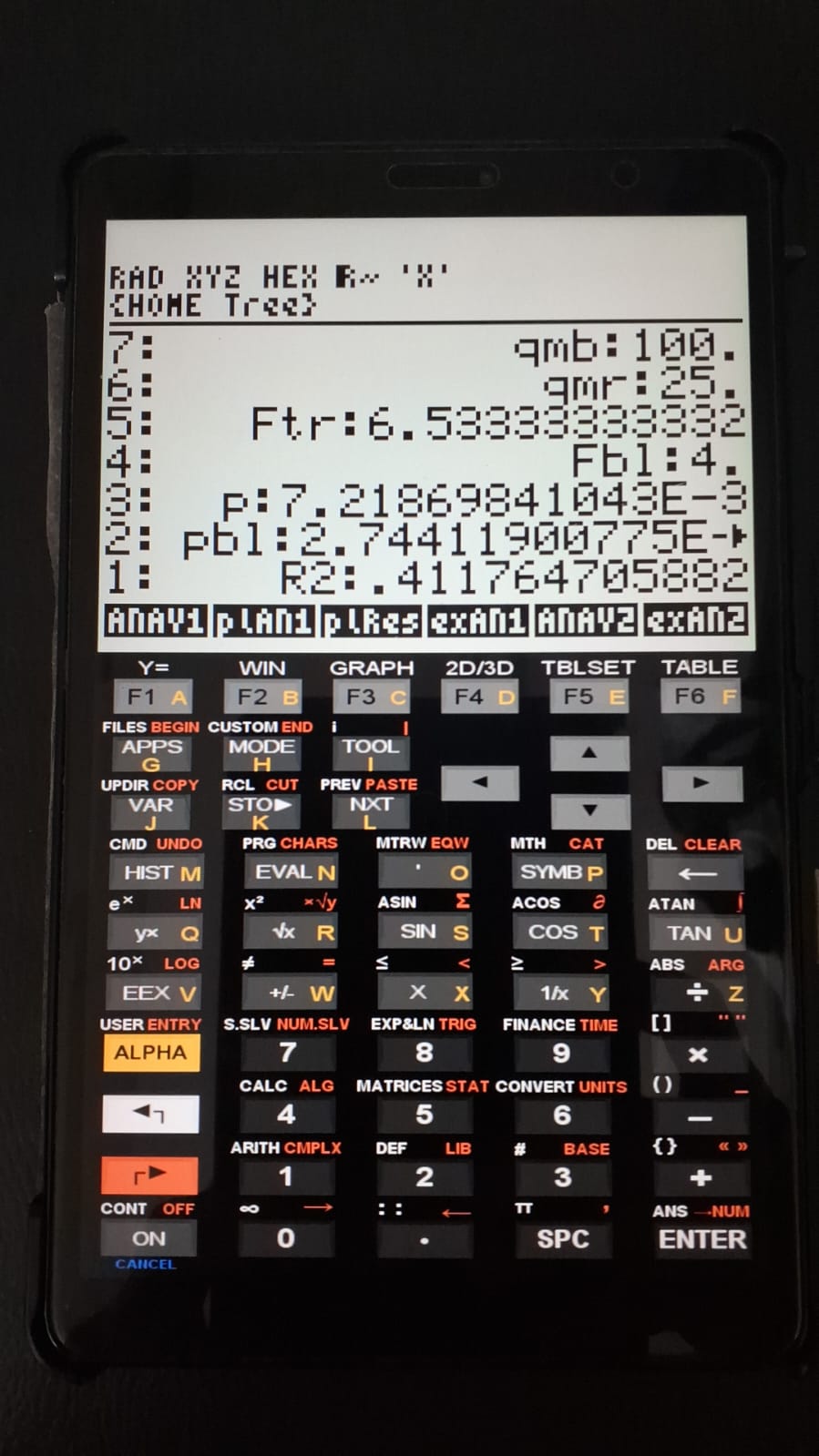
The obtained results are identical to those reported in the reference source (Vieira, 2000).
3 References:
- Vieira, Sônia. Analysis of Variance: ANOVA. Atlas Publishing, 2000.